
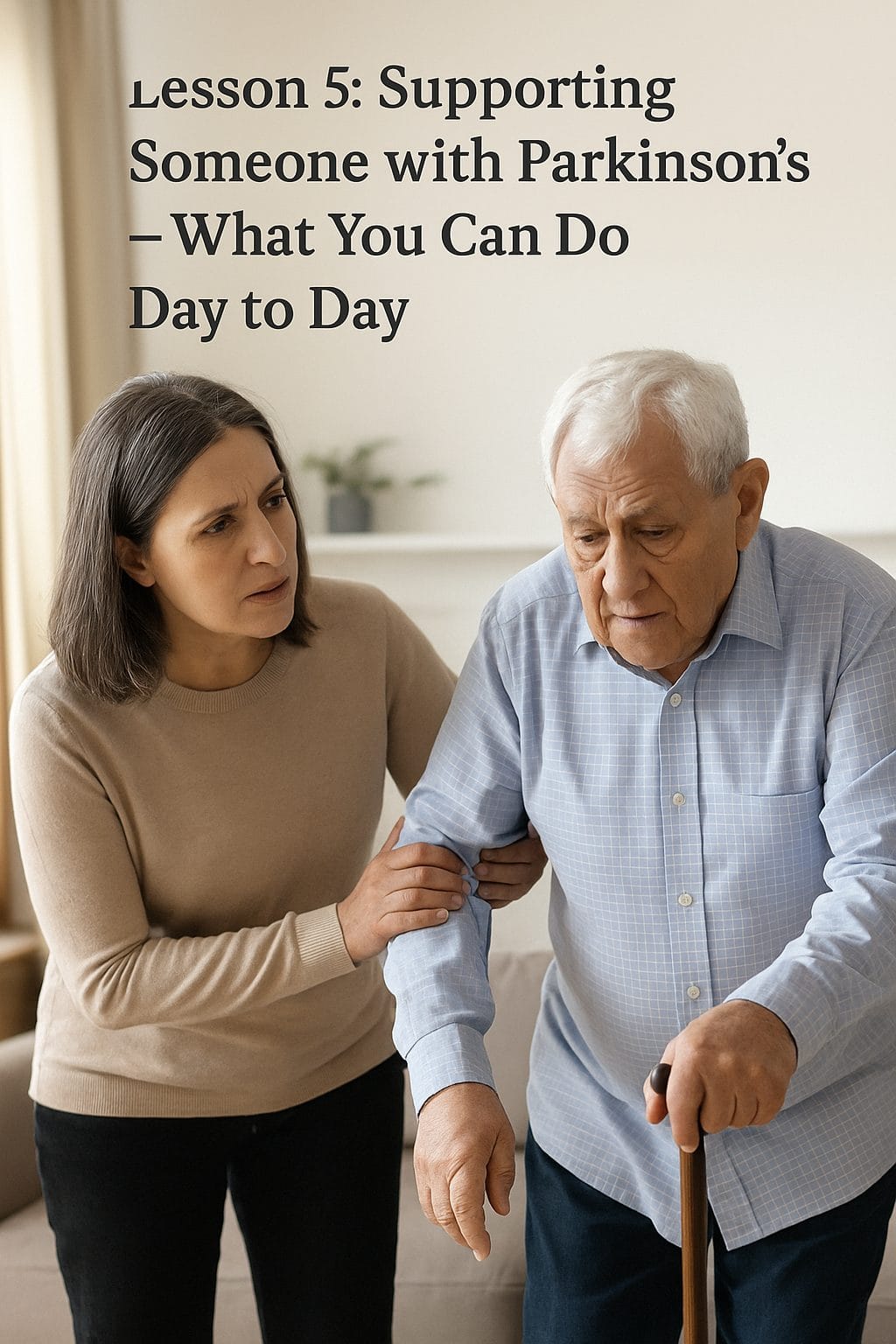
Lesson 5: Supporting Someone With Parkinson’s – What You Can Do Day to Day
Learning Goals
After completing this lesson, you will be able to:
- Recognize the challenges people with Parkinson’s face in daily life
- Identify simple, effective ways to offer meaningful support
- Understand the importance of routine, respect, and movement
Everyday Challenges
Living with Parkinson’s can make even simple daily tasks more difficult. Movement is slower, balance is less stable, and mental focus can come and go. This affects not just physical tasks but also communication, planning, and emotions.
For example, a person may struggle to get out of a chair, write a grocery list, or walk through a crowded room. They may feel frustrated, anxious, or embarrassed — even when they don’t show it.
What Support Really Means
Support is not about doing everything for the other person. It’s about understanding what they’re facing and offering help in a way that respects their independence.
Helpful support strategies include:
- Giving enough time to complete tasks without rushing
- Speaking clearly and with patience
- Helping maintain daily routines and structure
- Encouraging social activity and regular movement
- Listening without judgment or trying to fix everything
Encouraging Movement
One of the most important things you can do is encourage the person to stay active. Movement helps slow symptom progression and improves mood, energy, and quality of life.
This doesn’t mean pushing them hard — it means inviting them to join a walk, a class, or a light exercise session like Parkinson boxing. It can be as simple as stretching together each morning.
Respect and Autonomy
People with Parkinson’s often feel a loss of control. Supporting them means helping without taking over. Always ask before helping physically. Respect their decisions, even when things take longer or look different than you might expect.
Small Actions, Big Impact
Consistent, compassionate support makes a difference. Even a short visit, a message, or a shared laugh can help someone feel less alone. Your presence matters more than perfect words or actions.